
Living in the Pacific Northwest has its perks. Not only do we get to cheer for the best team in the NFL (“SEA–HAWKS!”), but we also don’t have to suffer through freezing blizzards or scorching desert heat. However, we obviously get a lot of grey drizzle, damp air, and chilly winds. That presents its own challenges, because dampness changes how your home holds heat.
When your house lacks proper insulation, your heating system works double time, meaning you could end up paying sky-high monthly bills. You’ll also get that drafty, bone-chilling cold from head to toe, no matter how high the thermostat is cranked.
Opting for the best type of insulation isn’t just about grabbing the cheapest pink rolls in the store and getting it done, it actually means you need to match the right material to the particular areas of your house. For example, your attic requires a completely different insulation solution than your crawl space. Now let’s get into the insulation types that actually work for Seattle and Tacoma homes.
The best insulation setup for homes in and around the Seattle-Tacoma area combine blown-in cellulose or fiberglass for the attic and rigid foam or encapsulated fiberglass batts for the crawl space. Because the Puget Sound region has high humidity and damp winters, choosing moisture-resistant materials with a high R-value (typically R-49 to R-60 for local attics) is essential to lowering energy bills and preventing mold growth.
You can’t talk about insulation without talking about R-value. The "R" stands for thermal resistance. In layman’s terms, it's a measurement of how well a given material obstructs heat from traveling through it.
So, if your insulation has a low R-value, that means the heat coming out of your vents is escaping straight through your ceiling, floor, or walls during winter. In July, intense Summer heat enters easily through those same materials, baking the interior of your home.
Our region falls into Climate Zone 4, so local building codes require some serious coverage. That means you need to reach a R-49-R-60 value to make sure you have a well-protected attic. If you see exposed wooden floor joists, you probably only have an R-19 rating, and that’s a massive gap.
An inefficiency like this completely explains why some rooms in your home feel cold even when the heat is on all day long. Heat naturally moves toward colder air, so you’re basically paying to heat the sky above Tacoma if you don’t have a thick barrier.
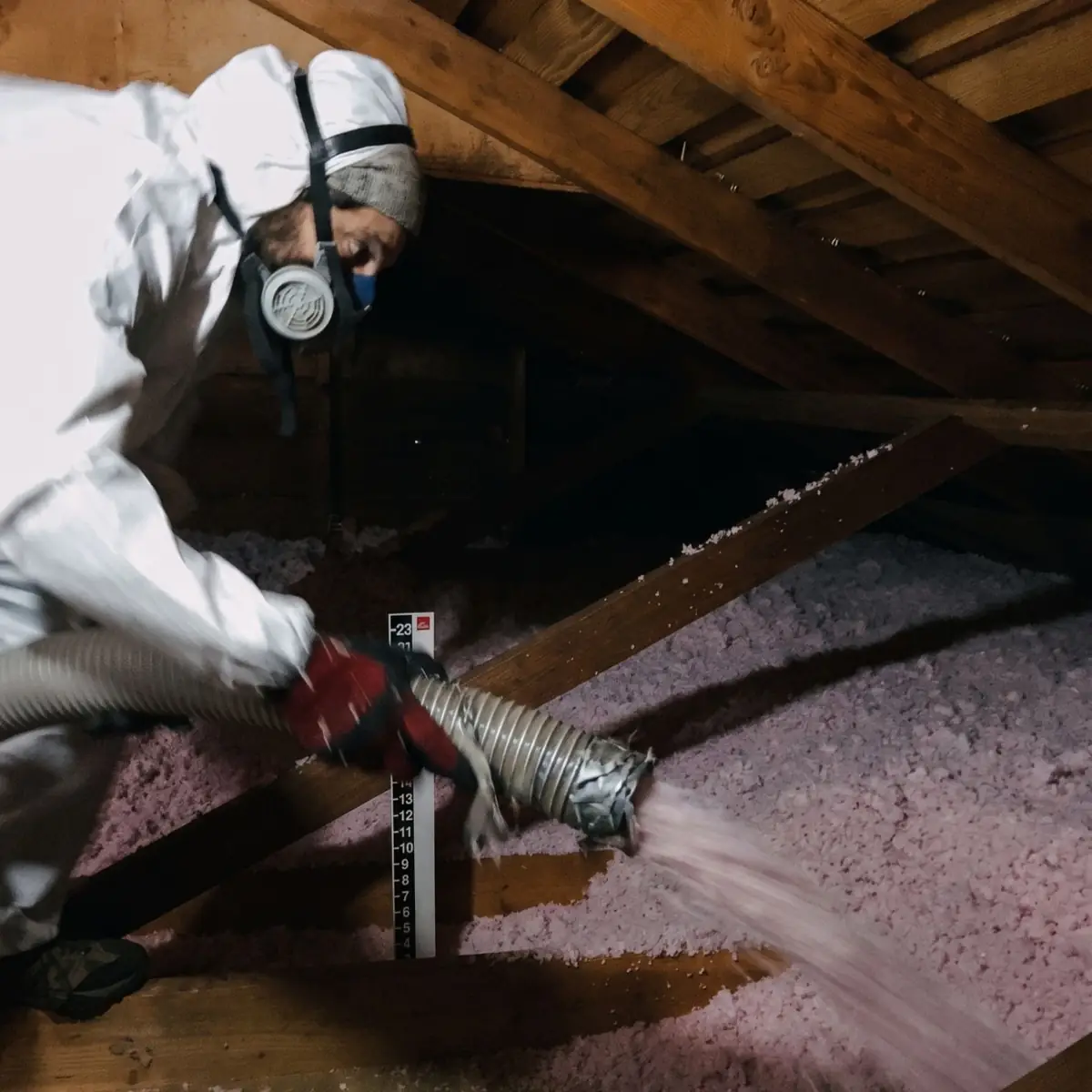
Most traditional attics in Seattle or even Puyallup use one of these two loose-fill options. We blow these materials into the needed space using a large hose. This fills every small gap, joist bay, and tight corner. At NW Energy Conservation, we highly recommend you take a close look at both choices.
This material's made up of spun glass fibers, so it’s lightweight and naturally fire-resistant.
Cellulose consists of recycled newspaper treated with boric acid, and this chemical treatment makes it fire-retardant and insect repellant.
In most attics, blown-in cellulose works perfectly because it packs tightly around highly complex roof framing. However, remember to double-check for roof leaks before updating your crawl space and attic insulation.
This is the premium option on the market for a simple reason: when sprayed, it expands instantly while creating a resistant airtight seal and an insulation barrier at the same time.
This dense material cures into a rock-hard state blocking both the air and the moisture.
This version stays flexible and soft after it expands and also fills large cavities quickly.
At NW Energy Conservation, we understand you’re constantly facing a battle against ground moisture: mud, puddles, and damp earth can be sitting just inches below your floorboards. We also know that traditional fiberglass batts stuffed between floor joists usually fail down there.
The heavy moisture makes the fiberglass sag and, once it does so, the cold air circulates between the insulation and your floor so you’ll end up always walking on freezing hardwood floors.
So, for crawl spaces, we prefer a better, more modern approach to keep the space dry: the combination of high-quality floor insulation with a heavy-duty vapor barrier. We also seal off the rim joists using spray foam, which is the perimeter wood frame where your house meets the concrete foundation. Cold air pours through these, so sealing them stops drafts before they ever reach your feet.
We know it’s easily tempting to buy a few rolls of fiberglass batts and do it yourself when you notice a drafty room or see your monthly energy bills climbing. However, tackling home insulation as a DIY project in the Pacific Northwest can often give you a huge headache.
The biggest problem area with DIY insulation is the prep work, as you can’t simply lay new material over old problems. If you ignore roof leaks in the attic or fail to fix ground moisture issues down below, you’ll simply be setting yourself up for future failure. Hire a local professional who knows how to get proper air sealing and moisture control in place before a single piece of insulation goes in.
How Does Poor Insulation Defeat Your HVAC System?
You can buy the most expensive heat pump or furnace on the market, but if your insulation is thin, that unit will struggle and eventually fail.
When heat escapes rapidly, your furnace runs continuous, exhausting cycles. This constant operation causes parts to wear out prematurely. You might find yourself debating between an expensive HVAC repair or complete replacement years sooner than expected.
Poor insulation also forces your system to move massive amounts of air to keep up with the heat loss. This extra workload pulls more dust through your system, meaning that dirty air filters increasing your monthly energy bills will be a frequent occurrence.
Fiberglass and spray foam can last up to 80 years easily if they’re in perfect conditions. However, you should bear in mind that cellulose often starts fading away after 20-30 years.
Yes, but only if the old insulation is completely dry and clean. If the existing material is moldy, wet, or full of rodent droppings, you must remove it entirely as it’ll damage your indoor air quality.
If you find any hanging batts of fiberglass, a musty smell in your home or unusually cold floors, that means it’s time to clear it out, sanitize the space, and install fresh insulation.
Definitely! This will protect your plumbing from sudden winter cold snaps and will keep the pipe's temperature always above freezing.
Your home should be a cozy refuge from the damp Northwest weather, not a place where you have to wear a jacket indoors. So, stop tolerating drafty rooms and high utility bills!
At NW Energy Conservation, we take care of your entire home: we look at your attic insulation, check your crawl space, and inspect your air ducts for leaks. We apply the precise insulation type your house needs to stay warm and dry instead of just using cookie-cutter solutions.
Save money and stay warm with our help! Reach out to NW Energy Conservation today and schedule your home energy audit in the Greater Tacoma and Seattle area.

.png)