
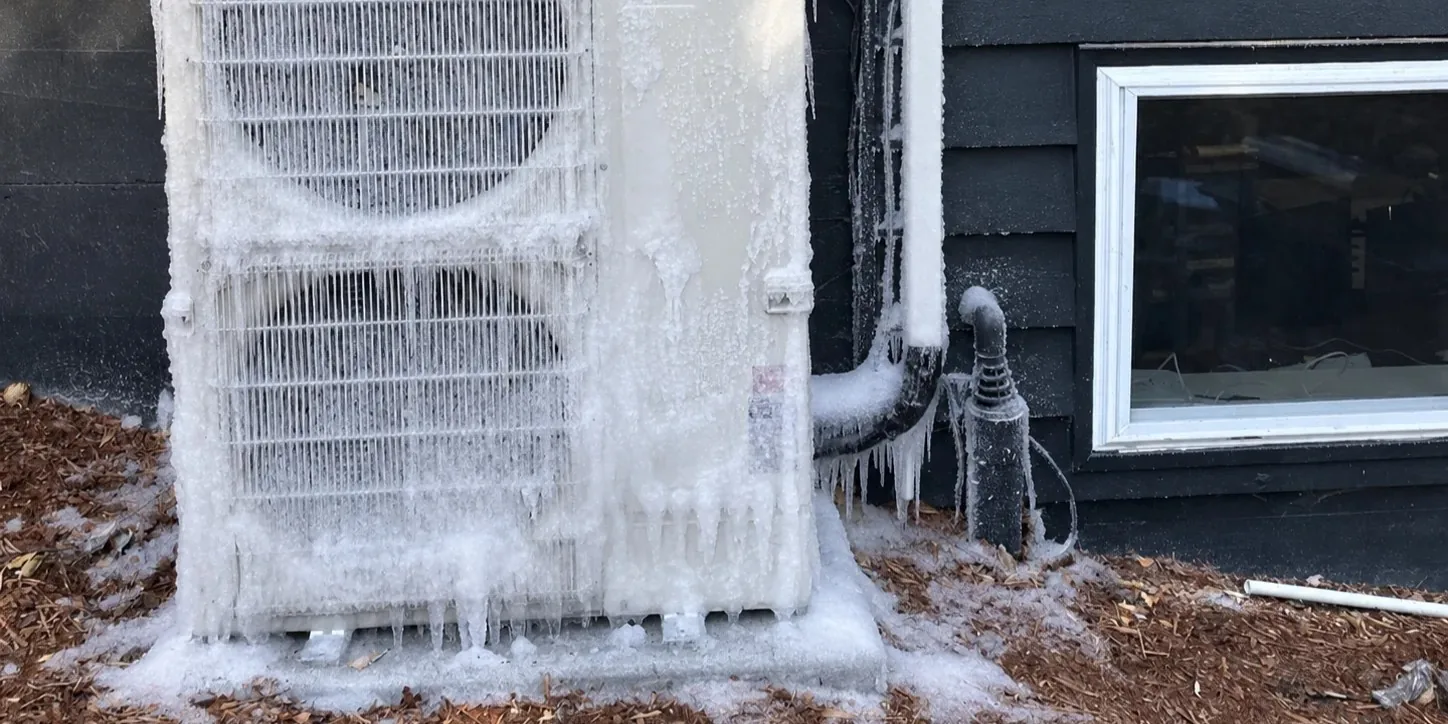
You walk outside on a chilly morning. Damp air fills the backyard and fog hangs low. You see Mr. Darcy walking towards you—I mean, you glance at your heat pump on the side of your house. There’s frost on the metal coils!
Don't freak out yet. A little frost is completely fine. Heat pumps pull heat straight out of cold outdoor air. So, in damp weather like we get in Seattle and Tacoma, frost builds up naturally on the coils when temperatures drop near freezing. Your system already comes built with a smart feature to fix this: the automatic defrost cycle.
The real problem pops up when that frost builds into a thick block of hard ice, dragging down your heat pump efficiency and burning through energy. Here’s a breakdown of how you can spot and stop a dangerous freeze-up of your heat pump before it happens.
Your heat pump absorbs warmth from wet outside air and pumps it into your rooms. The surface of the outdoor coils can drop below freezing as they absorb heat from the outside air. To stop frost from choking off intake air, your system switches into reverse mode every now and again.
Here’s what happens during a normal defrost cycle:
A normal defrost cycle can be wrapped up in 5 to 15 minutes. Then the system flips right back to regular heating once the frost melts away into water runoff.
When hard ice encases your outdoor box or keeps filling the bottom pan, something may be wrong with the heat pump. Ice stops outside air from reaching the heat exchanger coils, so without airflow, your heat pump can't harvest heat energy.
Snow, leaves, a failed outdoor fan, or water that can't drain properly can also cause ice buildup.
Here are some problems that affect your heat pump's performance. The first three don't usually cause outdoor ice, but they can make your home harder to heat.
In heating mode, reduced indoor airflow can hurt heat-pump performance and raise temperatures on the indoor side. The system may run longer, rely more on auxiliary heat, and struggle to keep comfortable indoor temperatures.
Ductwork air leaks in crawlspaces let your hot air escape into unconditioned spaces before it ever reaches your rooms. Check out our guide on hot and cold spots caused by ductwork design to see how poor layout forces equipment to overwork.
Duct leakage and airflow restrictions aren't usually the direct cause of ice on the outdoor coil, but they can make an already struggling heat pump work harder, increase auxiliary-heat use, and raise your energy bills. Check out how to spot the common signs your air ducts are leaking.
Heat pumps don't normally consume refrigerant, so low refrigerant usually indicates a leak somewhere in the system. Low refrigerant can interfere with heat transfer and defrosting, sometimes contributing to ice buildup.
If the defrost thermostat or control board breaks, your system forgets when to defrost. Frost builds up day after day until the unit turns into a solid block.
Your system freaks out when lots of ice covers outdoor coils. It loses the ability to transfer heat properly, and some systems may shut down to protect themselves. In some cases, severe icing can contribute to heat pump short cycling.
This constant stopping and starting can cause other problems:
If you’re trying to decide whether to repair or replace your HVAC system, fixing the cause of the icing and any HVAC airflow problems early can help prevent that full replacement.
Some homeowners immediately blame the outdoor unit whenever something goes wrong with their HVAC. We often find other problems in the attic, under the floor, or elsewhere!
Loose duct connections can leak heated air, collapsed flex lines will choke off airflow, and uninsulated sheet metal quickly loses heat. Proper air duct sealing and insulation keeps more warm air inside your home and allows your system to work easier and more efficiently.
When we seal leaky duct seams with professional mastic sealant and wrap them in thick insulation:
Duct sealing won't fix outdoor ice buildup, but it can keep your home warmer this winter without wasting so much energy and money.
Don't let a frozen heat pump leave your family in the cold this winter. At NW Energy Conservation, we keep homes warm, dry, and energy-efficient across Tacoma, Seattle, Puyallup, Olympia, Renton, and Gig Harbor.
We do it all! From heat pump repair and air duct sealing and insulation to crawl space moisture control and attic insulation upgrades. We inspect your complete system to fix airflow issues at the source.
Want to protect your heating system and lower your energy bills?
Contact NW Energy Conservation today to schedule service!
Steam is totally normal! During a defrost cycle, the system melts frost off the coils. That moisture can rise in a cloud that looks like steam as the coils warm up.
In cold, wet PNW winters, a normal unit might defrost every 30 to 90 minutes. Cycles usually last 5 to 15 minutes. Timing varies by system and weather.
If your system has electric backup heat strips, they may turn on during defrost or when your heat pump needs extra help in cold weather.
Not usually. Broken ducts can waste heated air and make your system work harder, but they don't normally cause outdoor coils to freeze. Persistent ice is more commonly caused by blocked outdoor airflow, low refrigerant, or faulty defrost controls.

.png)