
Many homes have that one, pesky, annoying HVAC flaw. It’s usually not enough to motivate us to make a change, but just enough to get on our nerves. That’s because it’s often isolated to just one room.
The rest of the house feels acceptable. Not perfect, but livable. Then there’s that space. The upstairs bedroom that never cools down. The converted garage that refuses to warm up. The bonus room that feels disconnected, like it belongs to a different house.
You’ve tried to run the system longer or adjust the thermostat, but end up just living with the discomfort.
Eventually, you hear about the mini-split. What in the world is it?
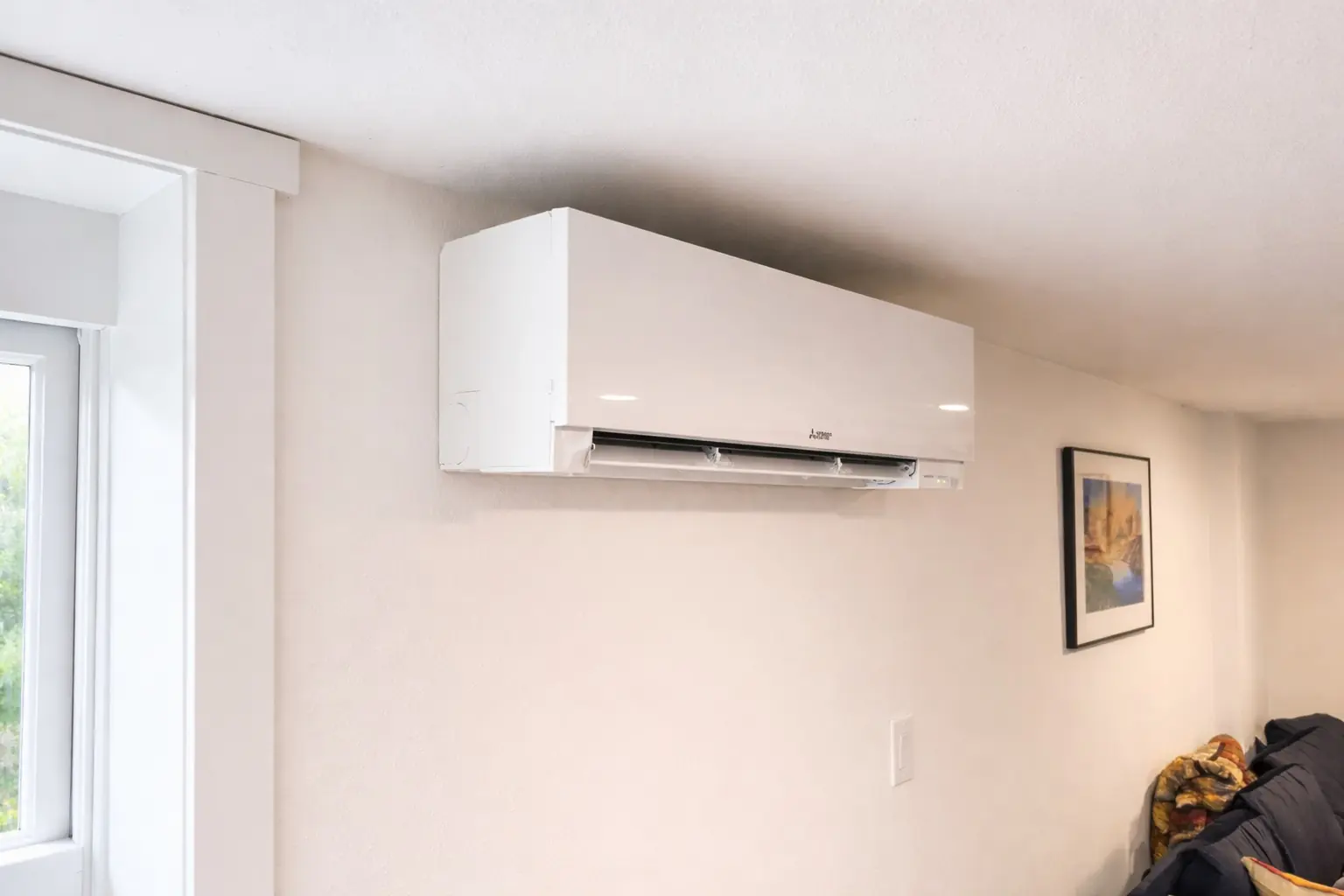
A mini-split is a heating and cooling system that doesn’t involve any ducts. So, instead of the air moving through the long, winding runs of your ductwork, this separate system directly conditions the room it’s installed in.
That direct delivery is the whole point of it.
Let us be clear; mini-splits are not capable of replacing your entire HVAC system. Their purpose is to manage the rooms or areas of your home that your current system can’t; especially when ductwork can’t be effectively extended or one room has other issues.
Homeowners usually start researching mini-splits as soon as they hear that there might be a perfect solution for their very specific problem.
Mini-splits are often the right answer when discomfort is limited to one space rather than the entire home.
We most often see them used for:
In a lot of these cases, adding ductwork can be too inefficient, costly, or disruptive. A mini-split sidesteps these issues entirely.
This is one of the most searched questions related to mini-splits in the Pacific Northwest.
Our latest mini-split systems are designed to function really well in cold weather. However, they don’t produce heat in the same way that a furnace does; they move it. This helps them operate effectively even in colder outdoor temperatures.
In the climate surrounding the Puget Sound, winters aren’t extremely cold, so mini-splits perform really well. Especially when considering that they’re responsible for smaller areas, like a single room.
That being said, everything still depends on the correct sizing, installation, and placement of the system. A poorly planned mini-split will struggle regardless of the unit’s features.
You’re probably wondering which direction is best for your specific situation: install a mini-split or extend your ductwork?
We’re sorry to say that we don’t have a one-size-fits-all answer for that. It all depends on the structure of your home and ductwork.
Extending ducts can involve opening walls, ceilings, and even floors. Added ductwork or runs can also create airflow imbalances or additional strain on your main HVAC system. Sometimes, your HVAC unit simply doesn’t have the power to handle more capacity.
By creating a separate zone with independent control, a mini-split avoids those risks. The main system serves the rest of the house while your mini-split handles that pesky room on its own.
Reach out to a licensed HVAC professional that you trust for an inspection. Our team at NW Energy Conservation will come in and review your ductwork and layout to give a thorough assessment and consultation on the benefits and drawbacks of either option for your home.
Keep in mind that installing a mini-split isn’t a magic wand that alleviates all HVAC problems in all situations.
If the whole house feels uncomfortable, drafty, or spotty, you have more problems within the duct design, insulation, airflow, or ventilation.
Installing a mini-split won’t solve those overarching problems. You need to make sure that your whole system is in good standing before seeking the help of a mini-split for a particular room.
Mini-splits work best for homes where the problems are clearly isolated to a specific room or floor.
Mini-splits are often praised for efficiency, and for good reason. Since they target a single space, they reduce energy use caused by overheating or overcooling efforts when homeowners try to compensate for the one problem area.
They also operate quietly and are quick to respond to temperature adjustments. That means they are running less frequently and help to maintain the desired temperature within a room more easily.
A lot of homeowners think that installing a mini-split involves some major work and disruptions. In reality, it’s often a fairly clean and straightforward job.
Installation usually involves mounting an indoor unit in the problem room and setting up an outdoor unit close by. A small connection simply links the two. There’s no additional ductwork or structural changes required to make it work efficiently.
When installed correctly, the system should blend nicely into your home’s layout rather than being a sore thumb. When NW Energy installs a mini-split, our project is focused, contained, and completed quickly.
So, now that we’ve determined that mini-splits are great systems for many homeowners, you need to decide whether or not they’re the right option for you.
Deciding factors include:
Take a deep look into each of the factors to determine whether or not you should pursue a mini-split consultation with NW Energy Conservation. If you’re still having trouble deciding, simply give us a call and we can answer your questions.
We approach mini-splits as one possible solution among many. Not a default recommendation.
Sometimes a mini-split is the cleanest solution available. Sometimes correcting airflow or insulation issues delivers better results. In some cases, a combination of different approaches works best.
Our goal is not to sell a system or a unit. It’s to establish comfort and efficiency in your home for years to come.
We highly recommend you strongly consider a mini-split and give us a call if the following apply to you:
These situations are common in Washington homes and are really well suited for a ductless solution like a mini-split.
Homes change over time. Families grow. Spaces get repurposed. HVAC systems designed decades ago are often asked to do more than they were built for.
Mini-splits bridge that gap in a unique way. They offer a way to correct comfort problems without forcing the entire home to adapt around one space.
When applied correctly, they are less like an unnecessary upgrade and more like a much needed correction.
Installing a mini-split could be the quickest, most practical solution for that annoying room in your home. We’ll help you determine if it's the best fit for you or if a different solution could solve your HVAC issues. Our goal is always the same; to elevate the comfort and efficiency of your home with long-term solutions.
Call NW Energy Conservation to schedule an evaluation today!

.png)