
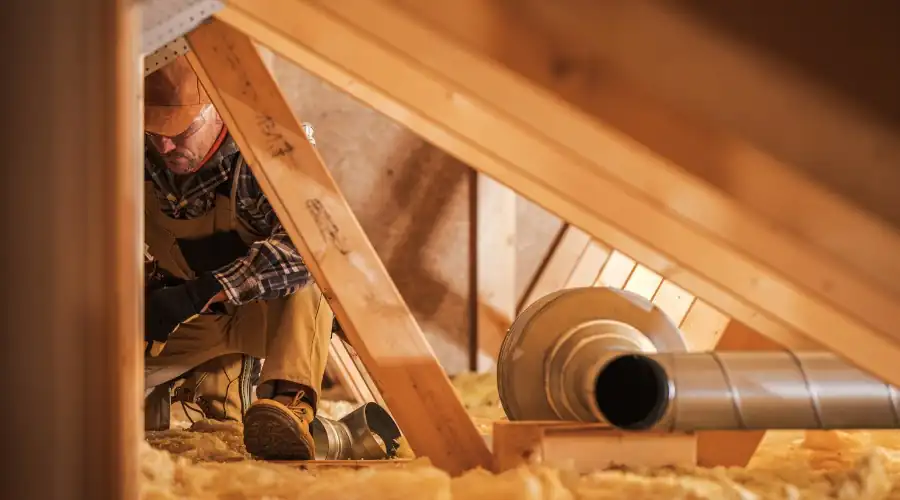
Yes, attic fans are highly effective for multi-story homes that suffer from extreme heat trapped in upstairs bedrooms during summer heatwaves. When paired with proper soffit intake vents, an attic fan considerably lowers roof-space temperatures and reduces the cooling load on your air conditioner or heat pump. They also protect your roof structure from moisture buildup during damp winters.
It’s going to be 92°F in a few days and it’s only June. You might be all too familiar with cranking up the air conditioner just because the second floor feels like a sauna. The main floor might feel cool and great, but it’s not normal for your upstairs bedrooms to be stubbornly hot at the same time. It becomes a huge headache when you or your kids can’t sleep through the night, or you wake up moody and sweating in the morning. The worst part about it all might just be the energy bills that are set to skyrocket.
You need to understand that your roof acts like a giant solar panel, absorbing intense heat all day long. Without moving air, that heat gets trapped inside your attic space where temperatures can easily climb past 130°F. That extreme heat then radiates downward through your ceiling and directly into your living spaces. Not to fear… there is a solution.
This is where attic fans enter the picture. They’re brilliant at pulling that superheated air out of your home and replacing it with much cooler air. So let’s get into whether or not they’re a good option for you.
Even though most people think attic fans are only on during summer heatwaves, these systems usually pull double duty across different seasons in the Pacific Northwest.
During our long, damp, dark winters, the main enemy is moisture rather than the heat. When you take a shower, cook, or do laundry, the warm vapor keeps rising. After some time, that moisture will sneak right up into your attic if your ceilings have tiny air leaks.
An attic fan can keep the air moving up there all year-round. It flushes out that damp air before it causes wood rot or mold growth. When it’s summer, the focus shifts back to temperature control.
If you run an attic fan, you can significantly drop the attic temperature down to a manageable number, relieving the cooling pressure on the entire house and system.
Two options exist if you want to install an attic fan, and your decision depends on your budget and roof layout:
These units are directly connected to your home's electrical panel, and they use a thermostat to monitor the attic temperature.
These units use a built-in solar panel to run a DC motor, and they require zero electrical wiring.
Here’s a detail that surprises many homeowners:
A fan can’t push air out unless fresh air is pulled in from somewhere else.
Your fan needs intake vents, usually located under your eaves (soffit vents), to function correctly. If your home lacks enough intake vents, a powerful attic fan will get desperate. It will start looking for air inside your house instead and that defeats the entire purpose. You’ll end up wasting money on cooling air just to blow it outside.
At NW Energy Conservation, we check your entire ventilation system before we ever install an attic fan. We make sure you have enough open intake area to feed the fan safely.
Your home is a connected system, so when you change the airflow in the attic, it’s also impacting everything downstairs, including your heating and cooling equipment.
If you have a heat pump or traditional AC unit, think of your attic fan as a shield. By lowering the temperature directly above your living spaces, your cooling system doesn’t have to work that hard. Your compressor runs shorter cycles which translates into saving yourself some cash.
Ignoring your attic climate puts incredible stress on your cooling system. You might find yourself researching an expensive HVAC repair vs replacement much sooner than you planned because your system spent years overheating.
Furthermore, many homes have air ducts running through the attic space. If your attic is a blistering 130°F, those metal ducts will heat up fast. The cool air inside them warms up before it ever blows out of your bedroom registers.
This is why we focus heavily on properly working ductwork and balancing your airflow across the system. Keeping the attic cool prevents your ducts from turning into heaters during July.
Truth is, they take care of two completely different jobs and you actually need both working together to get a functioning, comfortable home.
If you’ve got great insulation but zero ventilation, the heat will eventually soak through that blanket and warm up your house anyway. If you’ve got a great attic fan but thin insulation, the fan will pull air from your living room. When we evaluate local homes, we look at the whole picture.
At NW Energy Conservation, we can check if your crawl space and attic insulation levels meet current standards while also ensuring your roof vents can breathe. Balancing insulation with airflow is the real secret to lower utility bills.
You don’t have to suffer through another miserable summer with roasting bedrooms and exhausting heat. NW Energy Conservation will elevate your home comfort and reduce your energy bill!
Call, text, or message us today to:
Reach out to NW Energy Conservation today and set up your home energy evaluation across the greater Seattle and Tacoma area.
No, most powered units use a humidistat or thermostat. They only turn on in the winter if moisture levels get too high. They stay off during normal dry cold snaps.
Yes, if your fan’s making a loud buzzing or scraping noise, it usually means the motor bearings are wearing out or a blade is bent. We can inspect the unit to see if it needs a simple part swap or a full replacement.
Not directly. If your house feels chilly and uneven in the winter, the issue is usually related to your insulation thickness or your duct design.
We don’t recommend it. The job requires cutting a significant hole in your roof sheathing, sealing it against heavy rainy weather, and running electrical lines. Mistakes can lead to serious roof leaks or electrical hazards.

.png)