
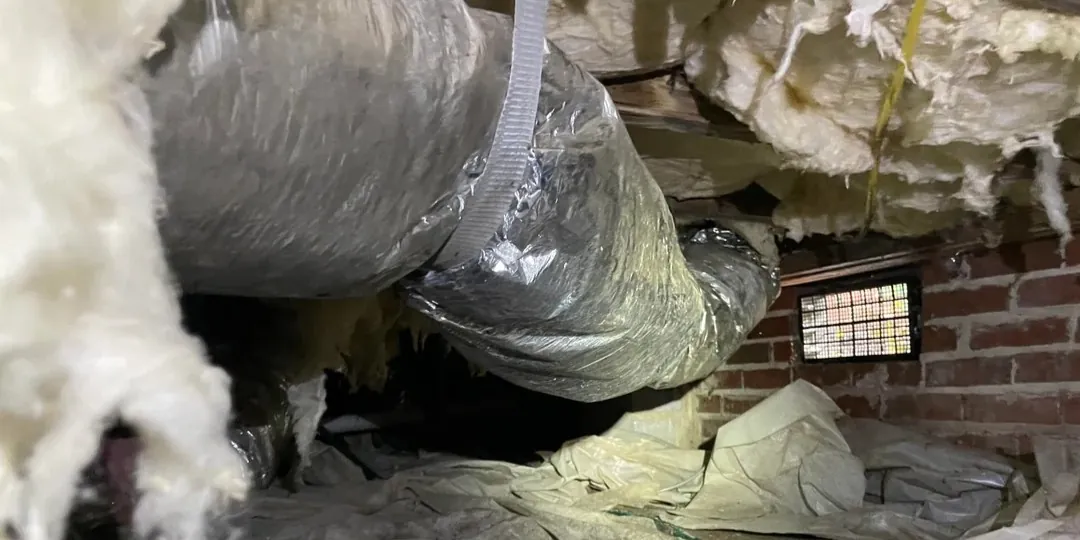
Any problems with your ductwork could potentially damage your heat pump or other parts of your heating or cooling system. That’s the short, easy answer, but it’s true. Crushed ducts, blocked returns, and debris can restrict airflow and apply pressure on your system.
Serious blockages simply make it harder for your system to move the air. That causes your heat pump to potentially run longer and the backup heat might even kick on more often. Over time, that extra strain can wear down various parts. That means your heat pump efficiency also goes right into the gutter.
Here's exactly how and why bad airflow can damage your pricey heat pump, and what to do if that’s already the case.
Air needs space to move. When a duct gets crushed or clogged, that space shrinks.
Most dust sticks to duct walls without causing much trouble. But thick debris, blocked returns, and badly sized ducts can choke the airflow.
Picture yourself putting your thumb over a running garden hose. Pressure builds up behind your thumb, right? Your blower faces the same struggle when ducts restrict airflow. And that resistance raises static pressure inside your ducts.
Many homeowners call us in January freaking out because their outdoor unit has frost. They ask: How can a heater turn into a block of ice?
During winter, your heat pump pulls heat from the outdoor air. It moves that heat indoors, and the blower spreads it through your rooms.
When blocked ducts restrict indoor airflow:
A little outdoor frost is normal during cold, wet winters and your heat pump quickly runs a defrost cycle to just melt it away. Thick ice that keeps building upon the unit is a different problem. Any trouble your unit is having with defrosting, the refrigerant, or outdoor airflow could be where that ice block comes from. We explain these issues in our guide to heat pumps freezing up in winter.
If your house isn’t warming up, start with checking your air filter. Here’s how dirty air filters can increase energy bills in your home.
Inside your outdoor unit sits the compressor and it’s the heart of the whole setup. It pumps refrigerant to move heat throughout your home. The compressor starts, runs, and eventually stops when your home reaches temperature, but airflow restrictions can disrupt that process.
When air can't move freely across the indoor coil, refrigerant pressure can rise. On some systems, a safety switch shuts down the compressor and that's when you hear your system restarting, then tripping again throughout the day.
That repeated stopping and starting is what we call heat pump short cycling. Short cycling obviously puts extra stress on the compressor and everything else.
If it keeps happening, your repair bill could get ugly. Read our HVAC repair vs replacement guide to understand when a full replacement is needed versus spot repairs.
Have you ever been inside of your crawlspace? If so, you know what that dungeon is like. Dark, maybe damp, probably chewed up by small animals. A lot of ducts have the old tape peeling away and that can lead to a couple of problems:
Your return ducts act like a giant vacuum cleaner. With holes in those ducts, the system can pull in crawlspace air. That air can carry dust, odors, and insulation fibers into even your bedrooms. That’s not exactly great for your home's indoor air quality.
The hot air you paid for blows under the house and warms that random space while your living room and other spaces struggle to get to temp. So your auxiliary heat starts running all day as backup and causes your power bill to climb.
Proper air duct sealing and insulation helps keep that heat inside where you need it to go. Seal crawlspace leaks and you can stop wasting so much warmth and money, especially in winter.
You don't need fancy tools to spot these warning signs:
None of these signs ultimately proves you have a duct problem, but they're good reasons to take a closer look.
At NW Energy Conservation, we know a heat pump is a huge investment. It keeps you comfortable during cold winter mornings and summer heat waves, so don't let blocked ducts or clogged filters wear it down.
We work with homeowners every day around Tacoma, Seattle, Puyallup, and Gig Harbor. We'll help you:
If your heat pump runs nonstop, short cycles, or blows weak air, call us right away or schedule a free home energy assessment. We'll inspect the ducts, test air pressure, and explain what needs fixing.
Reach out to NW Energy Conservation today!
Yes, when heavy debris blocks airflow, but ordinary duct dust rarely causes a breakdown. Crushed ducts, blocked returns, and clogged filters deserve more attention. Serious blockages can trigger safety switches and strain your compressor.
Listen to your outdoor unit. Every heat pump runs differently, especially newer variable-speed models. If it starts, runs briefly, and quits repeatedly, that's short cycling.
It depends. Ordinary duct dust rarely drives up energy bills, but debris that blocks airflow is a different story. Cleaning that blockage out can help your system run better, but fixing leaks or crushed ducts may save you more money in the long run.
Your HVAC system moves air through the house several times a day. Leaky return ducts can pull dust and odors from crawl spaces and heavy contamination inside ducts will affect the air you breathe. A little dust stuck to duct walls usually isn't a problem though.